Whale Watching Tweed Coast: When to Visit and Where to Look
Whale watching on the Tweed Coast can begin with something as simple as a coastal walk.
You might head out for the ocean air, find a comfortable place overlooking the water and spend a little longer than planned scanning the horizon. During migration season, that ordinary stretch of coastline offers the possibility of seeing one of the ocean’s largest travellers passing by.
The broad whale season runs from May to November. Humpback whales travel north along the NSW coast during the cooler months before returning south later in the year.
Migration is seasonal, but sightings are never guaranteed. Weather, sea conditions, distance offshore and the whales’ movements all influence what can be seen from a particular location.
The best approach is to make whale watching part of a coastal holiday you would enjoy anyway. From a base around Kingscliff, you can explore headlands, spend time on the beach, enjoy local dining and watch the water along the way.
This guide covers when to visit, where to look and how to plan a day that still works if the whales remain out of sight.
Plan Your Whale Watching Tweed Coast Visit Around the Migration
Whale watching on the Tweed Coast generally takes place from May to November, following the annual humpback migration.
When Is Whale Season on the Tweed Coast?
Whale season in Northern NSW generally extends from May to November.
NSW National Parks identifies late June and July as the peak of the NSW whale-watching season, when the highest numbers of migrating whales can generally be seen from the coastline.
The main attraction is the annual humpback migration between Antarctic feeding grounds and warmer subtropical waters, where the whales mate and calve.
The journey happens in two broad phases. Humpbacks travel north from around May to July, while the southbound migration takes place later in the year.
There is some overlap in timing, so it is better to think of the season as a moving natural cycle rather than a fixed calendar of arrivals and departures.
A June visit may coincide with northbound whales, while a spring holiday may offer opportunities to watch the return journey. Neither period guarantees whales will be visible from the particular stretch of coast you visit.
Which Months Give You the Best Chance of Seeing Whales?
June and July are commonly associated with the northbound migration, while September to November are the main months for watching humpbacks return towards Antarctic waters.
The broader season can begin earlier and continue through the intervening months, depending on individual whale movements.
If whale watching is a particular interest, allow more than one opportunity to spend time looking out to sea. A longer stay gives you flexibility to choose a clearer day, return to a favourite lookout or rearrange an outing if the weather changes.
For families, that flexibility can be particularly useful. A short visit to a headland may be enough for younger children, while keen nature watchers may prefer to settle in with binoculars and spend longer observing the water.
Find Your Whale Watching Viewpoint on the Tweed Coast
Whale watching on the Tweed Coast can take several forms, from an elevated headland visit to simply keeping an eye on the ocean during a beach walk.
Elevated positions can make it easier to scan a wider area of ocean. Beachside viewing gives you more freedom to combine whale watching with the rest of your day.
| Location | Viewing style | Type of outing |
| Fingal Head | Elevated ocean outlook from a rocky headland and viewing platform | A more deliberate land-based whale-watching visit |
| Norries Headland, Cabarita | Headland views with a boardwalk and designated whale-watching seating | Whale watching combined with beaches, parkland or time around Cabarita |
| Kingscliff and nearby beaches | Open coastal views from beachside locations | A flexible watch during a walk or relaxed day by the water |
| Cape Byron | Broad ocean views along a coastal walking track | A longer day trip beyond the immediate Tweed Coast |
Fingal Head for an Elevated Ocean Outlook
Fingal Head is one of the recognised land-based whale-watching locations in the Tweed.
Its rocky headland has a viewing platform positioned close to the northbound migration route, providing a broad outlook across the ocean.
It suits visitors who want to make a deliberate whale-watching outing rather than simply keeping an eye on the water during a beach walk.
Bring binoculars if you have them, allow time to settle in and scan different parts of the horizon. Whales may be distant, and periods without visible activity are normal.
The headland is exposed, so choose appropriate footwear, follow designated paths and keep well clear of rocky edges. If visiting with children, make the viewing platform and established paths the focus rather than exploring exposed sections of the headland.
Norries Headland and the Cabarita Coastline
Norries Headland at Cabarita offers another way to combine ocean views with a coastal outing.
The headland area includes a boardwalk and designated whale-watching seating, with access to surrounding beaches and parkland.
Couples can spend time looking out to sea before continuing to a café or a walk around Cabarita. Families may prefer a shorter visit before heading back towards the beach when everyone has had enough of scanning the horizon.
Stay within designated access areas and observe local signage. Some parts of the headland are restricted to protect sensitive vegetation, so follow the established route rather than looking for an informal shortcut.
Kingscliff and Nearby Beaches for a Slower Coastal Watch
Whale watching around Kingscliff does not always require a dedicated lookout visit.
Open ocean views around Kingscliff and nearby Tweed Coast beaches can make a morning walk or relaxed afternoon by the water part of the experience.
Find a safe place with a clear view of the sea, look beyond the breaking waves and give your eyes time to adjust to the movement of the water. If you see a blow or dark shape surfacing, binoculars can help you follow it.
This style of whale watching works well when the group has different interests. Some guests may be happy to watch the ocean for an extended period, while others would rather walk, read or enjoy the beach.
Cape Byron for a Longer Coastal Day Trip
Whale watching beyond the Tweed Coast can include Cape Byron for visitors happy to make a longer day of it.
The Walgun Cape Byron walking track passes through rainforest, grassland and coastal sections before reaching the lighthouse, with broad ocean views along the way.
The full loop is approximately 3.7 kilometres and is graded as a Grade 3 walk, with steep sections and steps. Shorter sections can be accessed from several points, which may suit visitors who do not want to complete the entire circuit.
Check current access, parking and park information before travelling, particularly during busy holiday periods.
Cape Byron can be worthwhile for a longer day out, but travelling that far is not essential for the possibility of seeing whales. Fingal Head, Cabarita and the wider Tweed coastline provide options much closer to Kingscliff.
Choose a Whale Watching Day That Suits Your Holiday
Whale watching on the Tweed Coast can be planned around the amount of time, flexibility and structure you want.
Watch From Land When You Want to Set Your Own Pace
Land-based whale watching is a simple way to enjoy the migration without committing to a tour.
Public viewpoints let you choose how long you stay, change plans if the weather turns and combine the outing with other activities.
A little preparation can make the experience more comfortable. Binoculars, water, sun protection and a warm layer are useful, particularly when the wind is coming off the ocean. If you plan to stay at a lookout for some time, something to sit on and a snack can also help.
Scan the horizon slowly rather than staring at one point. Pause when you notice movement and watch the surrounding water for another surfacing.
If you are using binoculars, locate the movement with your eyes first and then bring the binoculars up to follow it.
For families, keep the outing flexible. A shorter visit may suit children better than expecting them to remain at a lookout for an extended period.
Consider a Boat Tour for a Different Perspective
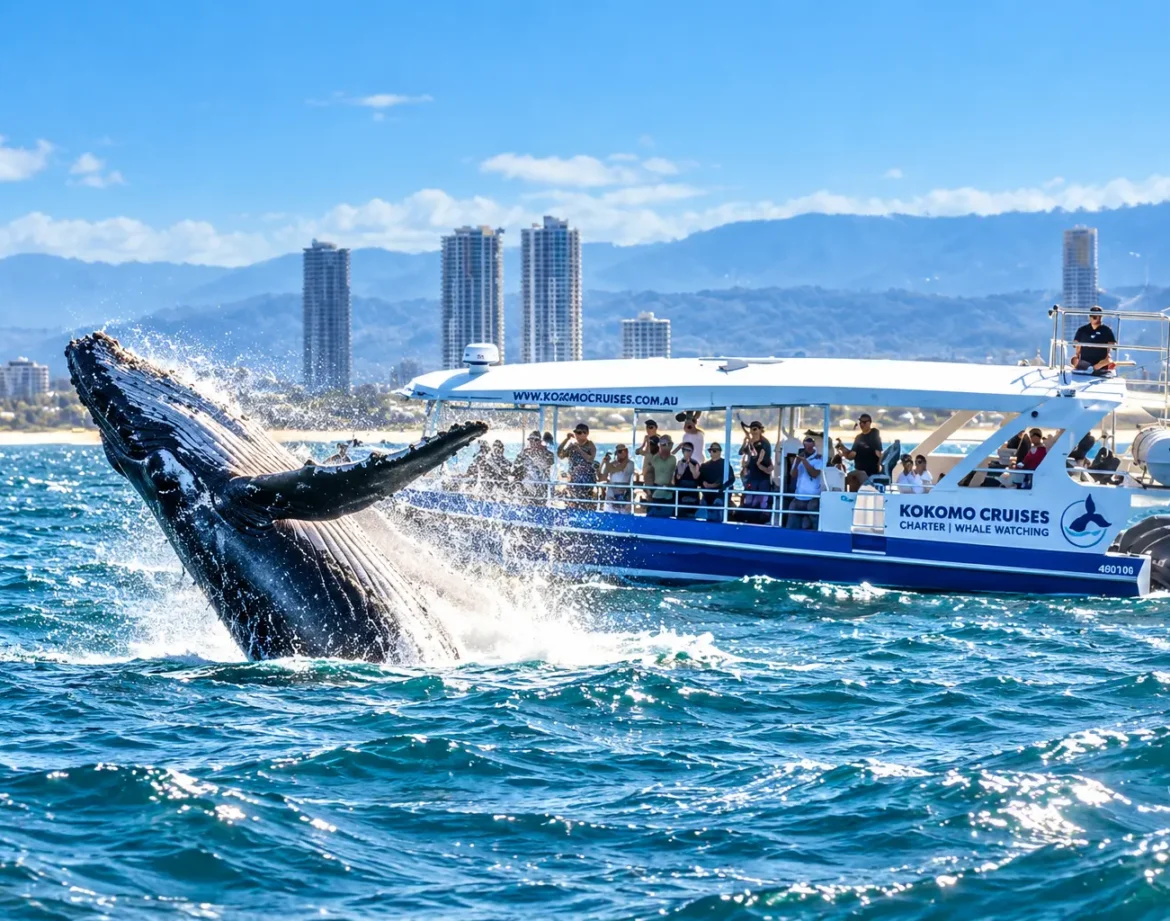
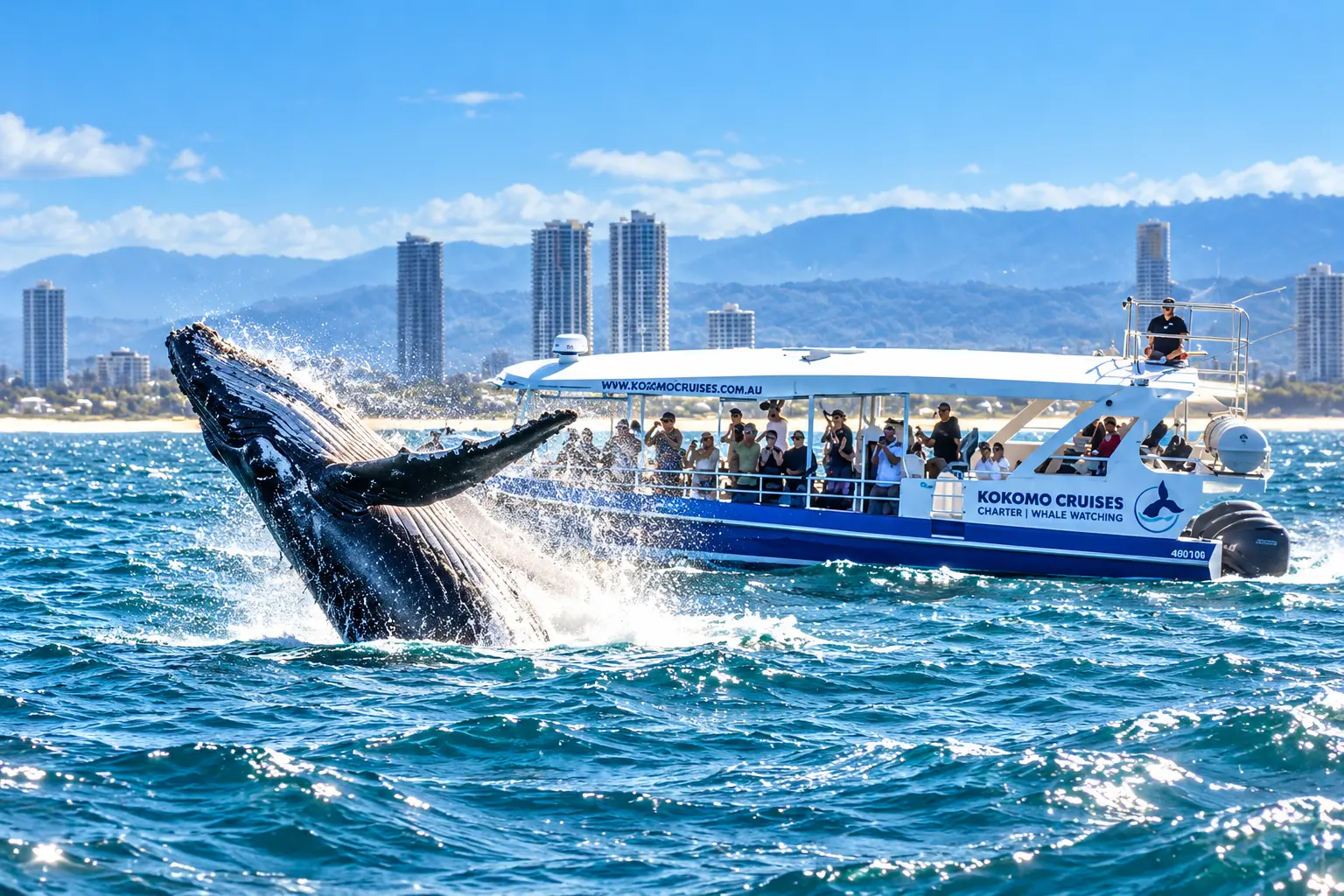
Whale-watching tours provide another way to experience the migration, with the opportunity to travel offshore under the guidance of an operator.
Tours operate seasonally from the broader Tweed Heads and southern Gold Coast area, although departure points, schedules and availability vary.
Before booking, check the operator’s departure location, trip duration, age requirements and weather cancellation policy.
If anyone in the group is prone to seasickness, ask about the vessel, expected conditions and whether the trip is suitable for them. Families should also confirm arrangements for younger children rather than assuming every tour has the same requirements.
Read the sighting policy carefully. Some operators may offer a return-trip arrangement when whales are not seen, while others have different terms. Do not assume a refund or another trip is automatically included.
Responsible operators must also follow applicable marine mammal protection rules. Whales should not be pursued simply to provide a closer photograph or more dramatic encounter.
Give Yourself More Than One Chance to Spot a Whale
Whale watching on the Tweed Coast rewards patience more than a strict schedule.
What to Look for on the Water
The first sign of a whale is often its blow, a visible cloud of vapour released as it surfaces to breathe.
You may then notice the curve of its back, a dorsal fin or a tail fluke as it dives. Humpbacks can also display more dramatic behaviours, including breaches, body rolls and pectoral-fin slaps.
A breach is memorable, but it is not the only worthwhile sighting. Watching a whale surface, breathe and continue along the coast can be just as absorbing, particularly once you begin to recognise the rhythm of its movements.
If you spot something, keep watching the surrounding area rather than expecting the whale to surface in exactly the same place. It may travel some distance underwater before appearing again.
A camera with a telephoto lens can be useful, but specialist equipment is not essential.
Why Whale Sightings Are Never Guaranteed
Whales are wild animals travelling through a vast stretch of ocean.
Their movements vary with migration timing, sea conditions and their own behaviour. They may also pass too far offshore to be seen clearly from land.
Weather affects visibility too. Glare, wind and rough water can make distant activity harder to identify even when whales are travelling through the area.
A clear day and good vantage point can improve the viewing experience, but neither guarantees a sighting.
Treat whale watching as an opportunity rather than an appointment. Plan a coastal walk, enjoy the lookout and give yourself time to observe. If whales appear, they become an extra part of an already worthwhile coastal outing.
Give Whales Space and Check the Current Rules
Whale watching on the Tweed Coast should allow the animals to continue their journey without disturbance.
From land, stay on designated paths, respect barriers and follow local safety signage around cliffs, headlands and rock platforms.
NSW National Parks recommends remaining at least five metres from edges and following local signage and staff advice.
Different rules apply when viewing whales from boats or from the water.
In NSW, general vessel rules require boats to remain at least 100 metres from whales, or 300 metres when calves are present, with additional speed and approach restrictions.
There are also species-specific protections to consider. As at September 2026, a NSW special order requires all vessels to remain at least 500 metres from southern right whales and swimmers at least 100 metres away. The order is in place until 30 November 2026.
Anyone planning an on-water encounter should check the current rules before departure because protections can change.
For most visitors, choosing an established viewpoint or responsible tour operator and following the guidance provided is the simplest approach.
Make Whale Watching Part of Your Kingscliff Holiday
Whale watching on the Tweed Coast does not need to be the only reason for your coastal stay.
Choose a Coastal Base That Suits Your Plans
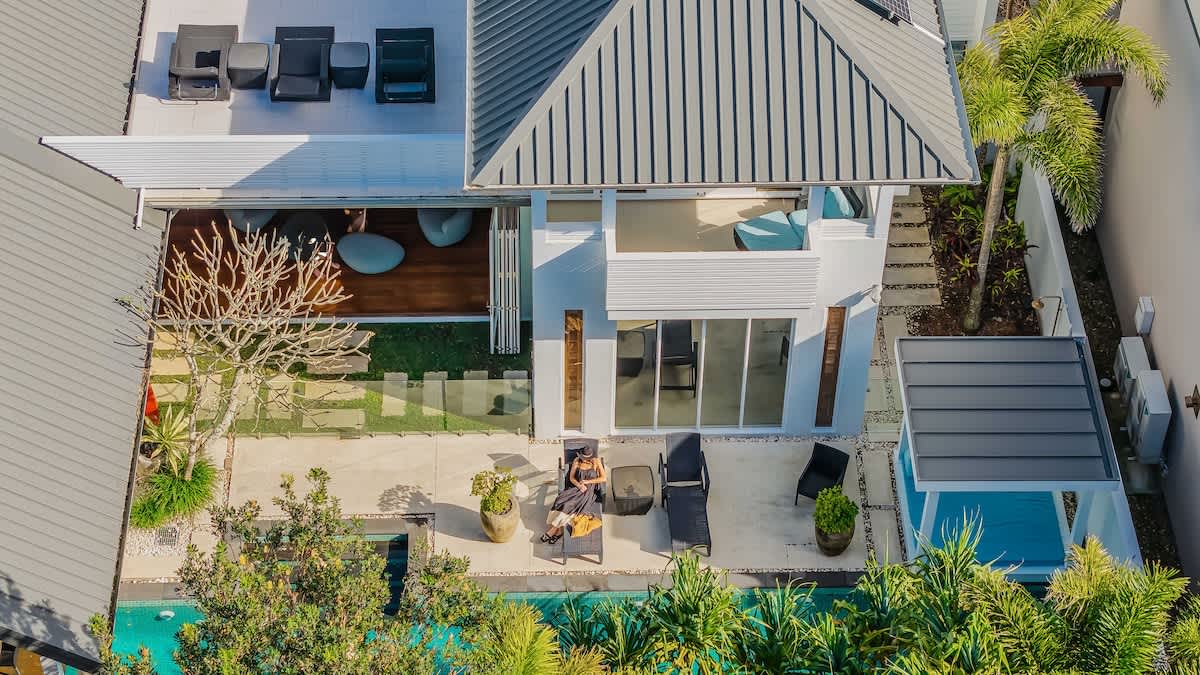
We offer self-contained holiday homes across Kingscliff, Casuarina and the wider Tweed Coast, giving couples, families and groups the freedom to enjoy the coastline at their own pace.
An ocean-view or beachside home can appeal to guests who enjoy spending time near the water.
Depending on the property, you may be able to relax outdoors, enjoy a meal with a coastal outlook or head out for a walk without organising a full day’s excursion. Features, views and distances to the beach vary between homes, so check the individual listing before booking.
An ocean view should not be treated as a guaranteed whale-watching location.
The direction of the outlook, distance from the water and movement of the whales all affect what may be visible. Choose a home for its overall suitability, with any wildlife sighting treated as an added bonus.
Explore Our Coastal Accommodation
If you are planning a visit during whale season, our accommodation search is a useful place to begin.
You can compare homes by location, guest numbers and the features that suit your holiday, then check available dates.
For some guests, that might mean a smaller home for a quiet coastal break. For others, it could be a larger property with room for the whole family, a pool or convenient access to the beach.
We can also help with practical questions about a property’s location and facilities before you book.
Explore our Kingscliff and Tweed Coast holiday homes
Whale Watching Tweed Coast FAQs
Can You See Whales From Kingscliff Without Booking a Tour?
Yes, land-based whale watching is possible along the Tweed Coast during migration season.
Open coastal viewpoints give you the opportunity to watch for passing whales without going offshore, although the animals may be distant or not visible on the day.
Allow time for a relaxed watch rather than expecting an immediate sighting.
What Is the Best Time of Year for Whale Watching on the Tweed Coast?
The broad season runs from May to November.
June and July are commonly associated with northbound humpbacks, while September to November are the main months for the southbound return.
Migration timing varies, so choose dates that suit your wider holiday plans rather than relying on a particular week for a guaranteed sighting.
Is Fingal Head a Good Place to Look for Whales?
Fingal Head is a recognised land-based whale-watching location with a viewing platform on its rocky headland.
Its elevated position offers a broad outlook across the ocean, making it a worthwhile option during migration season.
Follow designated access routes, stay clear of exposed edges and allow time to scan the water.
Do We Need Binoculars to Watch Whales From Shore?
Binoculars are not essential, but they can make distant activity easier to identify.
They are particularly useful for following a whale after you notice a blow, fin or movement at the surface.
Without binoculars, choose a viewpoint with a clear ocean outlook and give yourself time to observe.
Are Whale-Watching Tours Suitable for Children?
That depends on the operator, vessel, sea conditions and the child’s age and comfort on the water.
Before booking, check the minimum age, trip duration, safety arrangements and what happens if conditions are unsuitable.
If your family prefers a more flexible outing, a land-based viewpoint can be an alternative.
What Happens if We Book a Tour and No Whales Appear?
The answer depends on the individual operator’s terms.
Some tours may offer a return-trip arrangement, while others have different policies. Confirm both the no-sighting policy and weather cancellation arrangements before paying, as they may be treated differently.
Can We See Whales From an Ocean-View Holiday Home?
It may be possible from some ocean-facing properties during migration season, but no particular home can guarantee a sighting.
The position and direction of the view, distance from shore and the whales’ movements all influence what might be visible.
Choose accommodation for its location, comfort and suitability for your group, with any wildlife sighting treated as an added pleasure.
Find Your Coastal Base for Whale Watching Season
Whale watching on the Tweed Coast can be part of a dedicated lookout visit, a boat tour or simply a few days spent keeping an eye on the ocean.
Fingal Head and Norries Headland offer established viewing opportunities, while Kingscliff and the surrounding beaches make it easy to include whale watching in a more relaxed coastal holiday. Cape Byron provides another option for visitors planning a longer day trip.
Choose a season that suits your wider plans and allow more than one opportunity to look out to sea. The beaches, walks and coastal experiences give you plenty to enjoy whether whales appear or not.
When you are ready to plan your stay, explore our holiday homes across Kingscliff and the Tweed Coast. We can help you find accommodation that suits your group, preferred location and holiday dates.
Check available coastal stays or get in touch with our team.